
Sounding Secrecy at Speke Hall
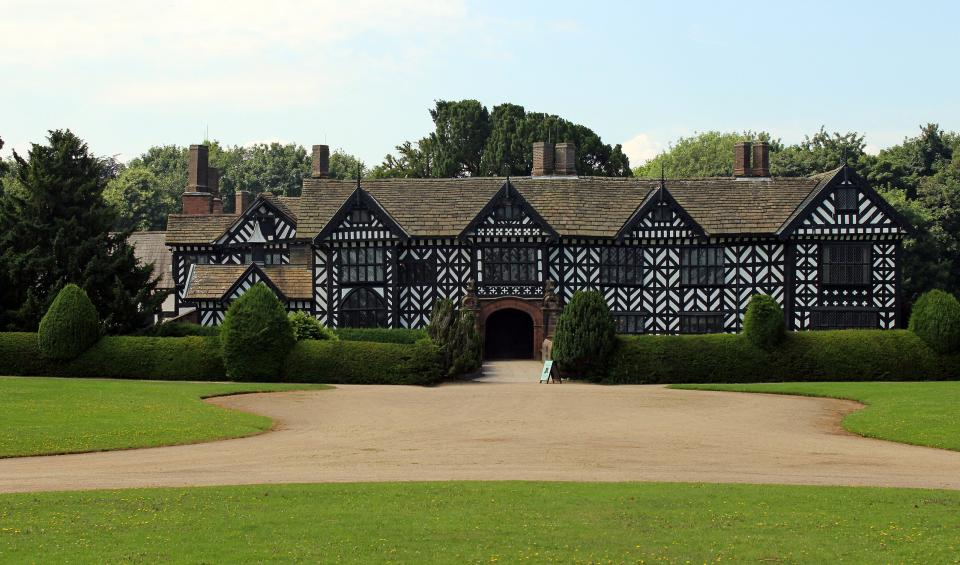
Speke Hall, on the banks of the river Mersey near Liverpool, was built by the Norris family, devout Catholics at a time of religious oppression in the sixteenth century. The central role of listening and hearing in protecting the family and their co-religionists is still evident in the fabric of the building today. Dr Rachel Willie worked with National Trust curators and composer Dr Peter Falconer to bring these aspects of the building to life in sound. Rachel explains:
“In 2019, we were awarded funding from the AHRC to establish the Soundscapes in the Early Modern World research network. The main objectives were to interrogate how we examine sounds historically, what sets historic sound studies apart from the broader field of sound studies, and how sound can be understood as a multisensory experience. Our three workshops addressed sound and architectural space, archives of sound and hearing, and the relationship between sound and the senses. These workshops were then followed by a conference (moved online due to the COVID-19 pandemic). Running parallel to the workshops and conference, we worked with the National Trust at Speke Hall, and with an electroacoustic composer, Peter Falconer, to produce a sound story.
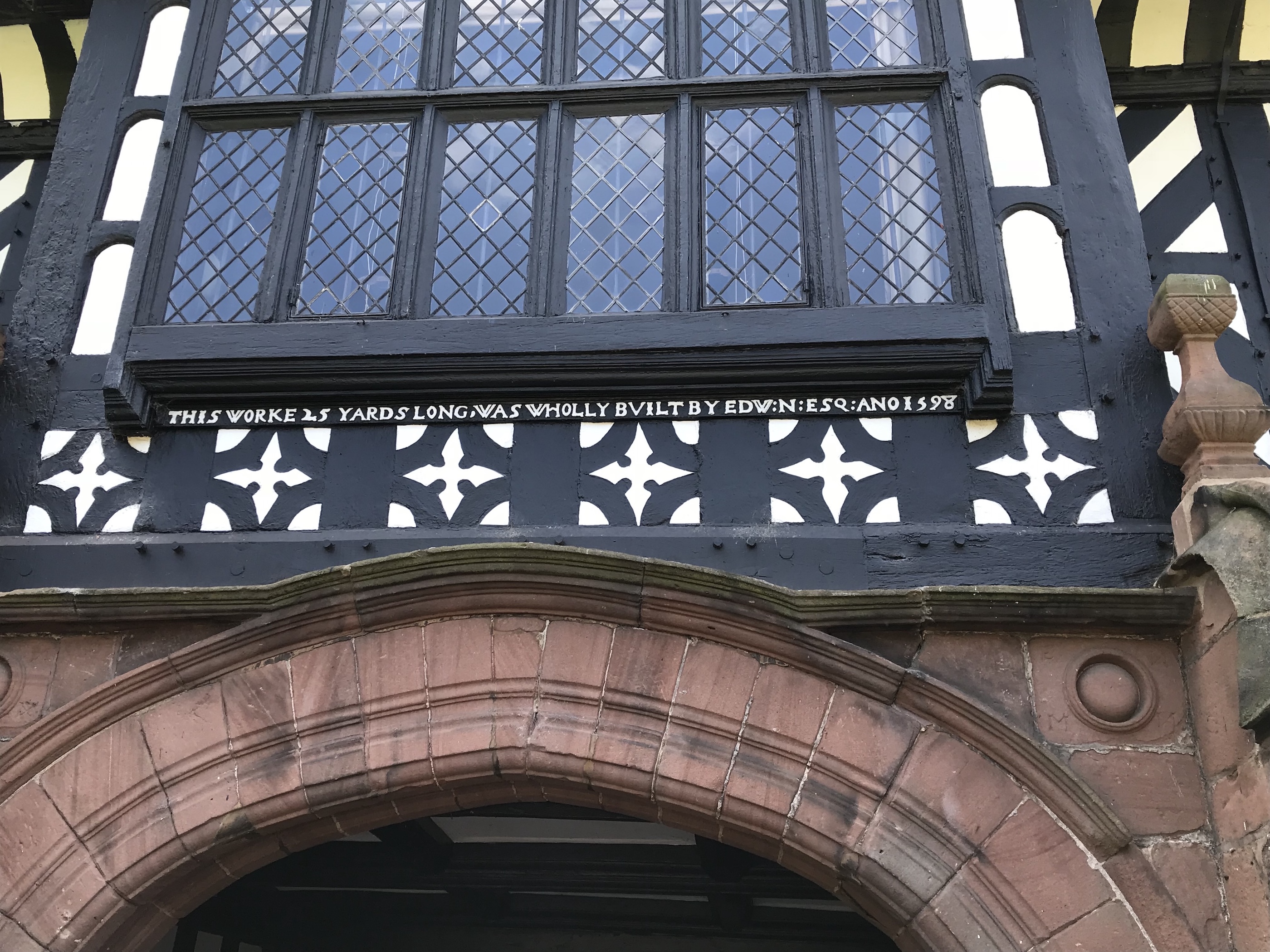
“I first visited Speke not long after I moved to Liverpool in 2017 and was immediately struck by how the regulation of sound was fundamental to the fabric of the building. The Hall was built between 1530 and 1598 by the Norrises, a prominent recusant family. In the eighteenth century, the Hall fell into disrepair and was later restored. While much of its interior is indebted to the nineteenth-century medievalist revival, many sixteenth-century architectural features survive: some of these features are visual and others enable sound to be amplified.
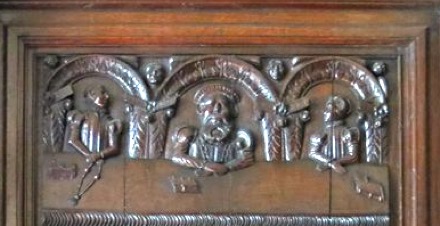
“An intricate overmantel in the Oak Parlour depicts the person who began work on building the Hall, Sir William Norris (1501-1568), flanked by his first wife, Ellen Bulkeley (m. 1521) and Anne Myddleton (d. 1563), whom he married after Ellen’s death and sometime before 1535. Some of the religious imagery in the carving also gestures enigmatically to faith.
“In contrast to this flamboyant visual imagery, other aspects of the Hall are designed to conceal. A priest hole in the attic, accessible via a hidden ladder next to a chimney breast in the Green Bedroom, illustrates the Norrises’ involvement in underground Catholic networks. A spy hole in the Blue Bedroom overlooked the main approach to the Hall, giving advance warning of raids by hostile authorities. In the Great Hall, the whispering gallery amplified the sounds of the conversations below, enabling those hidden to hear the conversations of those who gained entry to the building. Cut into the eaves directly above the main entrance, a hole added a further layer of surveillance as eavesdroppers listened in on the noises from the courtyard below.
"What struck me as we stood in the attic space above the main entrance was how crisp the sounds were from the courtyard below, even at a slight distance from the eavesdrop. A couple of visitors were engaged in a lively yet not loud conversation with a volunteer about the Adam and Eve trees – two yews that grow in the courtyard – and we could hear every word. It was fascinating from the perspective of understanding how the enclosed space had been designed with the amplification of sound in mind, though somewhat discomforting to realise how much sound carried through the space.
"Prior to working with us, the National Trust had mostly focused on the Victorian and Edwardian history of Speke, and the Watt family who bought the estate in 1795 and owned the Hall until Adelaide Watt died in 1921. The National Trust were keen to engage with Speke’s Tudor history; as part of this, we suggested a sound story, created from sounds recorded within the Hall and connected to the sounds of recusancy. While we were doing this, the National Trust produced their own in-house sound exhibit depicting a priest hiding in the priest hole, which they placed in the Green Bedroom with projected lights that showed the silhouette of someone climbing a ladder into the priest hole. We also contributed to aspects of an exhibition about the recusant history of the Hall.
"An aspect of impact that fascinated me when we were working with the National Trust was how differently heritage providers and universities understand what impact embodies. Whereas universities primarily focus on knowledge exchange, the National Trust also takes into account how activities enhance the emotional connections visitors make with the spaces. Catherine Jackman, who was based at Speke, put together a questionnaire to gauge visitor responses to the exhibition, mostly focussing on Edward Norris and his wife, Margaret, who were active in recusant circles (and heavily fined). One question asked if Edward was right to hide priests, knowing the consequences for him and his family and another question asked the same about Margaret. It was striking how gendered the responses were: most visitors thought Edward was right to do this and Margaret was wrong, illustrating pervasive gender stereotypes about familial relationships and the home.
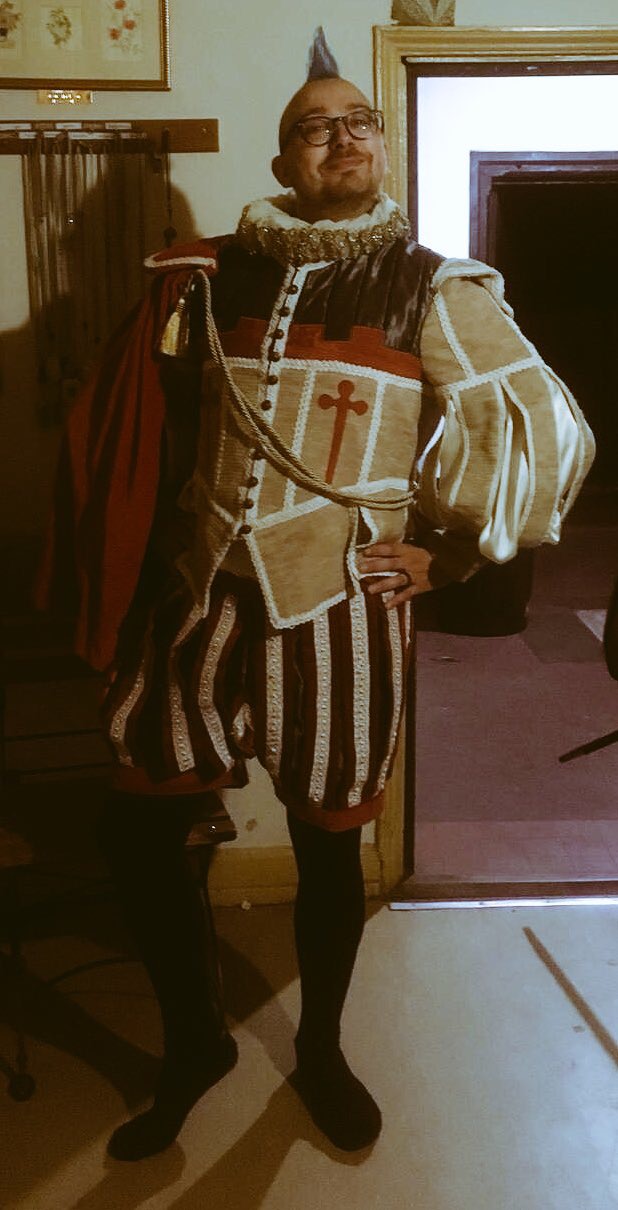
"To create our sound story, Peter was allowed access to the Hall after the building’s visitor opening hours, when twenty-first century aeroplane noise from the nearby airport would be at a minimum. He recorded sounds from various parts of the Hall using a binaural microphone. These included a mixture of sounds generated by the Hall – such as doors being unlocked – and sounds generated in the Hall, such as footsteps running along corridors, music, and dialogue spoken by volunteers. For the recording, Peter borrowed a doublet, hose and shoes from the costume department at Speke, in order that his footsteps and the rustling of his clothes would sound as authentic as possible. He also drew from contemporary accounts of priests and mixed these into a voiceover narrative. The resultant sound story was not intended as an ‘authentic’ recreation of a raid or an attempt to tell the story of what it was like to be a Catholic family hiding a priest in England in the sixteenth century. Instead, it takes the sounds from the hall and asks the listener to reflect on identity and persecution."
Peter’s sound story, At Last, the Leopards, is available online, and the project serves as an example of what is possible when it comes to synthesising historical research, practice-based research and modes of engagement, offering opportunities for capturing both emotional and intellectual connections with sound heritage.